Mariano Rajoy, leader of the opposition Popular Party, is set to put two election defeats behind him on November 20 and become Spain’s next prime minister. But his all-but-guaranteed victory (opinion polls suggest the PP will win around 190 seats in the 350-seat parliament, its largest ever majority) has little to do with him.
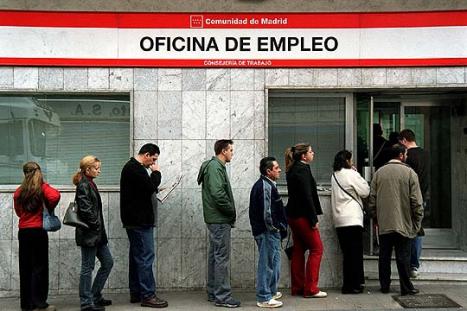
Instead, it has much more to do with a three-year economic crisis, an intractable unemployment disaster and escalating worries about Spain’s debt and public account deficits – problems, compounded, if not induced in the eyes of many, by the economic mismanagement of the current Socialist administration of Prime Minister José Luis Rodríguez Zapatero.
Those issues, not his own political competence, will propel Rajoy to power, so voters might be forgiven for asking what the centre-right politician plans to do about them. Obviously more spending cuts are on the cards, but where, what and how much? Rajoy, a 56-year-old former deputy prime minister, has said he “wouldn’t like” to cut pensions and has even pledged tax breaks for small businesses, without going into details. Similarly, he has promised a “true” bank restructuring, but hasn’t said what that would entail.
Admittedly, the PP has taken the lead on some economic issues, spearheading, for example, the controversial reform, agreed with the Socialists last month, to put a constitutional “golden cap” on public spending. But when it comes to what Rajoy will do after he all-but-certainly wins the election, no one seems to know. Instead of saying anything now and risk losing votes from part of the electorate, he is keeping his cards close to his chest: he is letting the Socialists win the election for him, and effectively seeking a blank cheque to do whatever he deems necessary after he takes office just before Christmas.
It seems likely that Rajoy may follow in the footsteps of Britain’s David Cameron, taking much more drastic measures than his predecessor to cut spending and balance the budget. After all, he will inherit a deficit that was the third-largest in the euro zone last year, a jobless rate of 21 percent and a banking industry struggling with surging borrowing costs. Currently, Spain is paying around twice what it costs Germany to borrow for a decade despite intervention by the European Central Bank to prop up the Spanish bond market.
Last week, Standard & Poor’s downgraded Spain’s credit rating by a notch to AA-minus, a week after its rival Fitch Ratings sliced the rating by two notches to the same AA-minus level. Both agencies judged the outlook to be “negative,” meaning there is a risk of more cuts ahead. Moody’s Investors Service has followed suit, also downgrading Spain’s credit rating.
All three give similar reasons: feeble growth, bad finances in the regional governments, a banking sector yet to recover from the 2008 property bubble collapse, as well as massive private debt held by households and businesses.
After letting its public accounts slide into a deficit equal to 11.1 percent of annual gross domestic product in 2009, Spain met its 2010 target and cut the deficit to 9.3 percent of GDP. It is now targeting deficits of 6.0 percent of GDP in 2011 and 4.4 percent of GDP in 2012, but there seems to be little chance of those targets being met if growth does not – miraculously – pick up.
The prospect of another recession
No one now believes Spain can achieve the official 2011 economic growth target of 1.3 percent, and some analysts are also pointing to the prospect of a new recession taking hold over the winter. It will hardly be the easiest time to take over as prime minister. However, Rajoy may have a few advantages that Zapatero never enjoyed.
One would be an absolute majority in Congress – if he can secure it – which would give the new government an almost free hand to pass deficit-cutting measures, without the need to secure support from the Socialists or nationalist parties. An absolute majority would also likely assuage at least some of the worries of international investors by giving a greater sense of political stability, which in turn should lower Spain’s borrowing costs. And because most of Spain’s 17 semi-autonomous regional governments are under PP control, Rajoy should have a stronger hand when it comes to trying to clean up bloated regional finances.
Rajoy, therefore, is likely to find himself far less hamstrung than Zapatero in tackling the economy, but the specifics of how he will go about doing so remain anyone’s guess.
No money, no jobs and no information on how the party that’s supposed to govern Spain intends to solve the problems.
Well, ain’t it nice to be a citizen.
To be accurate your headline should read ‘Spain’s possible next prime minister’. Your headline means it is a 100% foregone conclusion and if true than why bother to have elections?
In any case I hope for Spain that Rajoy does not win because Rajoy is only interested in Rajoy. Zapatero had the guts to make some very difficult and damaging (for him and his party) decisions, although most Spaniards seem incapable to see that. It is absurd to blame a prime minister of a country like Spain which is so reliant on tourism, for jobs lost during a worldwide financial crisis. The high unemployment figures quoted do not take into consideration that in Spain there are so many people working black … something which hardly happens in north European countries due to a tight control on that sort of thing and the consequently much larger income from taxes. If Zapetero did anything wrong it is not closing that loop hole but that would have made him even more unpopular and I do not see Rajoy doing that either.
Yes, Rajoy is likely to finish what Zapatero started: the ultimate submission of Spain’s government to the international rich elite also known with names as “Troika”, IMF, FED, ECB, etc.
If Rajoy & his friends thus submit the power that they are going to attain in this rigged ‘democracy’, we will be on our way to a real crisis, not one of Moody’s ratings or rate differential, but one where society shakes as a whole.
Listen to the people in the streets last Saturday, the 15-O message was a clear “it is our country, stop messing with it!”
Good article Andrew, in hindsight it seems strange that we are still in the same place as we were last October. The cuts have been announced but still too many details are lacking from Rajoy and his government.