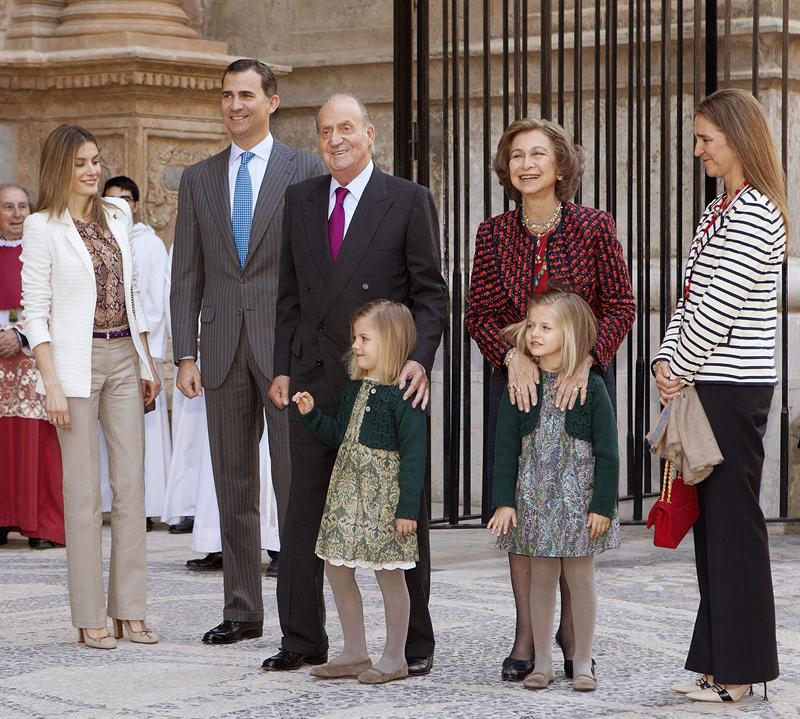
The dung from King Juan Carlos’ accident, while on a private trip to Botswana to kill elephants during which he broke his hip, has well and truly hit the proverbial fan, with Spain revelling in an unprecedented outpouring of criticism in the media that looks set to continue.
The King has apologised for the gaffe, promising on state television to Spaniards before limping out of hospital: “it will never happen again.” Ouch: that must have hurt more than the crack he gave himself after tripping over his tent peg on safari.
However humbling the experience, his plea to be given a chance to redeem himself and get back to being the king everybody loves may have been too little, too late. He already faces having to stand down as president of the World Wildlife Fund, although quite what a man so well known for his love of killing animals was doing in that post in the first place is a mystery to me. Could he now be looking at early retirement from Spain’s top job, a position he has held for 36 of his 74 years?
Although Spaniards like to call their prime minister a “president”, Juan Carlos is head of state. And as such he has played a much more active role in his country’s political life than any other comparable European constitutional monarch, including Queen Elizabeth. Lest we forget, this is the man who along with Felipe González steered Spain from dictatorship to democracy.
The perfect dung storm
So how did it come to this? The last two years have been, to say the least, trying: Juan Carlos’s very own anni horribili. In May 2010 he underwent an operation to remove a lung tumour, which has reportedly left him tired and distracted. In June and September last year his ankle and knee were operated on, with the royal press office admitting that the king was having difficulties walking.
Then the Iñaki Urdangarin scandal broke, although shortly before that he had managed a poor 4.89 score out of ten in a nationwide opinion poll. As news of his son-in-law’s dodgy financial dealings emerged, the royal household moved in to full damage-limitation mode, announcing that its accounts would be published, and sidelining Urdangarin and his wife from public events. When it was reported that the king had warned his son-in-law about his activities as far back as 2006, many wondered why Juan Carlos had not taken action until the affair had blown up into a full-scale crisis.
The Urdangarin affair drags on, and it looks as though evidence will emerge showing that Juan Carlos knew more about his son-in-law’s activities than he has cared to reveal so far.
The leaders of Spain’s two main political parties have been circumspect about the king’s hunting accident, but they are clearly aware that this is a watershed moment for the monarchy.
It’s been almost 34 years since the Constitution enshrined Juan Carlos’ position. Since then a new generation has emerged that not only knows nothing about General Franco, but would probably struggle to name the year that Spain hosted the World Cup, a year after a failed military coup.
The young don’t care
In 1996, an opinion poll carried out by Metroscopia showed that 66 percent of the population backed the monarchy, with just 13 percent of people describing themselves as republicans. Last year that figure had changed dramatically, with just 49 percent in favour of a monarchy, and 37 percent wanting a republic. Among the under 35s it was a dead heat.
In the wake of the Urdangarin affair, the balance seems to be shifting more quickly: according to leading daily El País, polls to be published in the coming days show that among the under-35s the republicans have the edge, and the reputation and standing of the king, and perhaps more importantly his son and heir, Felipe is in decline.
Despite its much trumpeted role as guardian of democracy, the monarchy in Spain has few true friends: many older members of the Popular Party, which was founded by a minister who served Franco loyally for many years, see him as a stooge of the left, and are bitter at the honeymoon years of the transition when the Socialist Party was the face of modern Spain, and Juan Carlos its easygoing king.
Although the king’s political survival largely depends on the Socialists, it shouldn’t be forgotten that many in the party hark back to its republican roots.
Which brings us to the elephant in the room: will Juan Carlos abdicate, die on the throne, or spark a crisis that could do away with the monarchy entirely? Prince Felipe is taking over his father’s duties for the time being — he can look forward to a good booing at the final of the football King’s Cup on May 25 between Barcelona and Athletic Bilbao — but there are no official statutes regulating his tasks.
As if all that weren’t enough, there is the question of the constitutional changes required to end the dominance of the male line: if Felipe and Letizia have another baby any time soon, and it’s a boy, he’ll take precedence over his older sister. Neither the Socialists nor the Popular Party are particularly keen to address the issue, fearing further debate on the monarchy. Who can blame them?
He breaks his hip within 100 hours of being pranked on 2012 April 1:
http://wwwsouthcapitolstreet.blogspot.com/2012/04/interview-with-king-juan-carlos-on.html
How long was he in Botswana before that April 6 Good Friday that he was reportedly hunting?