Perhaps the most notable aspect of Monday’s opening of the high-speed train link between Madrid and Valencia was not the protest against Prince Felipe (reflecting the ebbing popularity of the Royal Family) or against Alicante Mayor Sonia Castedo (currently experiencing corruption-related issues) or against Prime Minister Mariano Rajoy (for whom no new reason is apparently needed in order to prompt a demonstration). The notable thing was that the protests – and, coincidentally, the celebrations – were so modest.
Prince Felipe pointed out that Spain’s high-speed rail network (which every report on the event conscientiously pointed out is the world’s second largest after China’s) is “an excellent business card for our companies”. This is true. It may not be much consolation to the millions of Spanish citizens for whom an AVE ticket is currently unaffordable, but it’s still true. Rail links, motorways, and airports (even unused ones) are magnets that can – eventually – attract investment in recovery.
Valencian Prime Minister Alberto Fabra (no relation to the political dynasty of that name which attracts colourful headlines from time to time) said the new line could result in a 40-percent increase in tourist arrivals in Alicante, which would translate into 70 million additional euros in income. This may err a wee bit on the side of wishful thinking, but it’s theoretically possible.
Despite its “budget woes,” Mr Rajoy said, the government will press ahead with plans to double the high-speed network in the next decade at a cost of €25 billion “to stimulate investments that . . . contribute to . . . economic recovery and job creation.”
Railway lines may or may not deliver this happy outcome, but (if we take an optimistic view) it’s encouraging that the government is thinking in terms of growth rather than simply in terms of survival.
Hedged bets
Chastened by the crisis, ministers have been careful about announcing its end prematurely. Still, the government’s principal economic spokesmen this week took caution to the level of an art form.
The figures for the second quarter of 2013, which will be officially released next month, are certainly not good, but apparently they’re not that bad either. On Monday the finance minister, Cristóbal Montoro, suggested that “the second quarter could be a clear turning point,” and “it’s very possible that our economy has touched bottom.”
“Could be”? “Very possible”?
The language of hedged bets continued on Tuesday when Economy Minister Luis de Guindos described the provisional second-quarter data as “much less bad” than the first quarter, with registered growth that “should be close to zero”.
It might once have been surprising that such figures would represent grounds for optimism, even optimism as anaemic as this.
And yet, like the economic logic of high-speed trains, the tentative identification of a turnaround stands up to scrutiny. A turnaround happens at the worst point in the cycle – by definition, it takes place against a backdrop that is grim.
If a turnaround really is underway then it may not be much longer before more than a tiny minority of citizens can afford to buy tickets for those high-speed trains.
Tax penalty
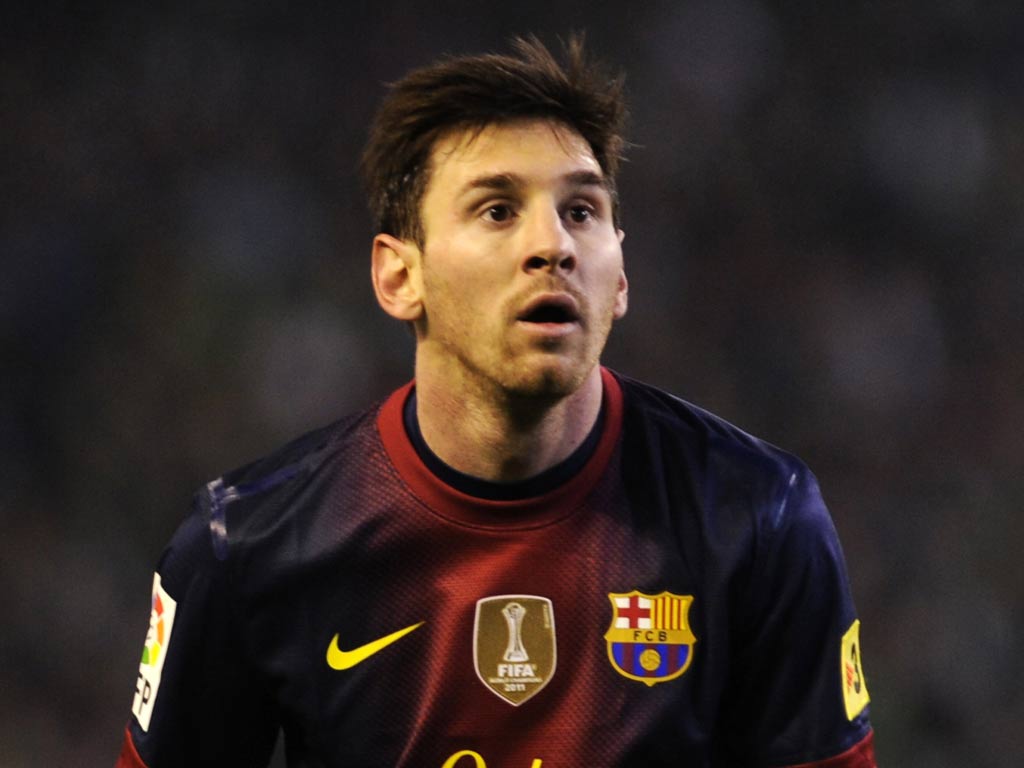
One Spanish resident who can afford to travel by any means of transport he chooses is Lionel Messi. It turns out, however, that Messi, now just about universally regarded as the world’s best footballer, may not be the world’s best filler in of income-tax forms.
An unassuming, conscientious individual, Messi’s protestations of absolute surprise and bewilderment that his tax affairs may not be in order have met with some sympathy.
The size of the unpaid tax bill – €4.2 million from 2006 to 2009 – points to the size of the footballer’s earnings. This will not soften the blow suffered by players of Union Deportivo Salamanca, the soccer club that filed for bankruptcy this week after a 70-year history that included 12 years in the Primera. The club is now selling its players, apparently with the prospect of raising €200,000. Not only is the ruthless monetization of athletes more than a little degrading, the price in this case – at least in footballing terms – is painfully modest.
To read more by Anna Maria O’Donovan visit My Spanish Interlude.
Leave a Reply
You must be logged in to post a comment.