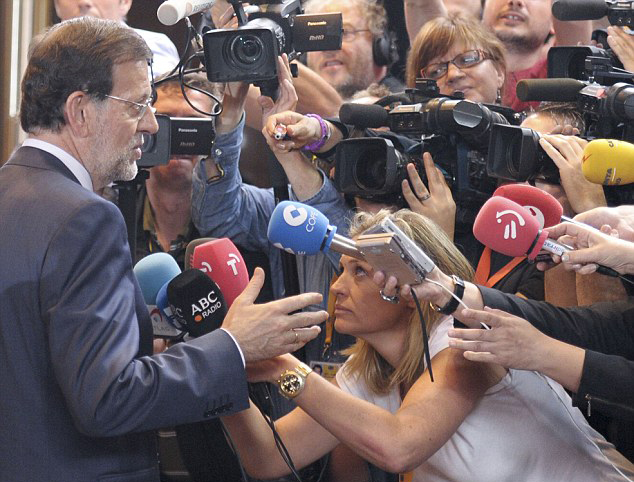
That, at least, is the takeaway from yesterday’s EU summit, in which Spain and Italy won significant concessions to keep themselves solvent, only by telling Germany they would block “everything” unless immediate steps were taken to help them. Does it sound professional? No. But insofar as Mariano Rajoy and Mario Monti were desperate, it probably doesn’t matter.
Moreover, the panicked tactics of the Spanish and Italian premiers have provided the breakthrough the markets were looking for. On Friday, the euro climbed 1.00% against the pound and US dollar and, compared to the brief rally that followed Spain announcing its bailout, this one looks set to last. “At last,” the markets are saying, “here is real progress on the debt crisis, the likes of which we haven’t seen in two years.”
So what exactly has been agreed, to prompt this sustained relief? Angela Merkel’s most significant concession is that use of the Eurozone’s rescue funds will no longer have to be funnelled through the sovereign, but can be channelled direct to troubled banks. So in the case of Spain, this means its €100bn bailout will not add to its public debts, helping immensely with perceptions of its spiralling debt.
In addition, unlike in the recent past, the rescue fund will no longer have “preferred creditor status.” This is the idea that, if Spain goes bankrupt for whatever reason and cannot pay all its debts, public creditors get paid back first, increasing the chances of losses for private backers. It made investing in Spain seem considerably more risky.
The exchange rate aside, this breakthrough has immediate benefits for Spain and Italy. At the time of writing, the bond yield on both countries had fallen as a result of this, in the case of Spain back beneath the 7.0% danger point. Yet as ever with the European Union, things (even good things) are never quite so simple.
For instance, the summit has so far not answered important questions such as: if Spanish banks can tap the rescue fund directly, how do they do so? And what conditions would be imposed? There’s been talk of the European Central Bank creating a Eurozone banking authority to deal with this, and yet how strict the rules are could have a significant impact on whether this is useful or not to Spain.
Furthermore, is removing the preferred status of the rescue fund really such a good thing? The people funding the ESM are, after all, the 350 million inhabitants o the European Union i.e. you and me. If Spain goes bankrupt, there’s therefore an equal chance of ordinary people taking a hit, on top of the endless bailouts and rescues already made to finance in the last four years.
Last of all, it’s (alas) quite possible this won’t signal the end of the Eurozone’s woes. German may have conceded last night, but there still remains a huge ideological divide between the way in which Angela Merkel wants to take Europe, and the desires of Francoise Hollande, Mariano Rajoy et al. They could put a dampener on this recent jubilance before too long.
I will return with my next update next week. If you have any questions about changing currencies or transferring money abroad in the meantime, please don’t hesitate to leave a reply in the box below. I’d be delighted to provide an in-depth personal answer to your enquiry, free of charge.
Many Spaniards and Italians,not trusting their politicos, will quite like the idea of more EU regulation of their financial centres which would lead to more transparency and less corruption but the politicos won’t like the loss of this nice little number.