From Tunis to Cairo and from Madrid to Manhattan, outrage has been the overwhelming theme of 2011. Outrage at ineffectual, unrepresentative political systems, outrage at coddled elites, outrage at the financial system and the perceived culprits for the economic turmoil that has spread around the world.
The year of outrage began on the streets of Tunisia in January, spread throughout North Africa and the Middle East as Arab Spring revolutions unfolded across the region, and, by late spring, the wave of indignation hit Europe.
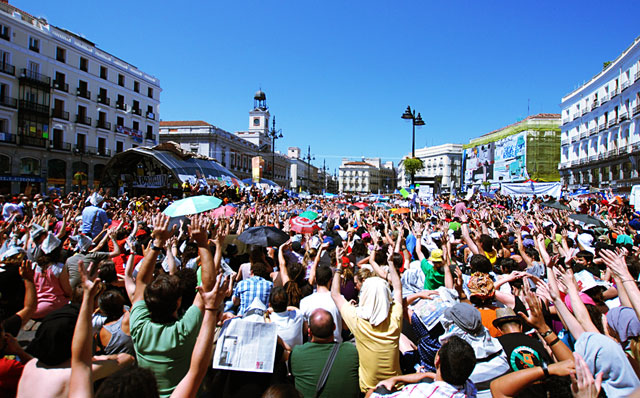
In Madrid in May, the seed of a different style of revolution was planted as thousands of activists – mostly young, many unemployed – set up camp in the city centre. As one slogan, popular at the time, made clear: “No one expects the Spanish revolution.” Unlike their Arab counterparts, Spain’s indignados weren’t seeking to overthrow an authoritarian regime, but rather change a political and economic system that has disenfranchised the young and left voters detached from their government.
The protests in Spain may have fizzled out as the months have worn on but their impact still remains visible: Not just in Spain, but throughout the western world in movements such as Occupy Wall Street, OccupyLSX in London and Occupy Berlin. If anyone deserves to be named “Iberians of the Year 2011” for their impact and influence, it is Spain’s indignados.
Last May, as the campaign for Spain’s local elections got underway, it looked like business as usual. Neither of the two main political parties was managing to inspire voters with hope or ideas as the country’s jobless line grew and the economic crisis deepened.
But on May 15, the Sunday before the elections, a group of well-organised, mainly young, activists gathered in Madrid and marched to the central square of Puerta del Sol. They set up a makeshift campsite, declared the Spanish political system unrepresentative and obsolete, and within days their support had snowballed across the country and the eyes of the world were on them… READ MORE
Zorionak!