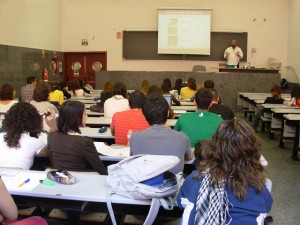
I had been fortunate to make contact with Tina Sánchez Alfocea, an English teacher at the school. Tina had been enthusiastic about my request to visit, meet her students and ask her some questions. I wanted to see for myself what the inside of a Spanish secondary school looks like and test out some of the anxieties that parents of foreign students have. If you have been following this series of features you will know that many British and other expat parents find themselves in a dilemma. Should their children attend an international school or enter the Spanish system? For some there isn’t an option. The fee-paying alternative of an international school can be well out of bounds. However, … [Read more...] about Inside a Spanish school
bullying in spain
Education in Spain, an international alternative
According to every school I asked the response was… think again! If your child is young enough then it is likely that they will pick up Spanish quickly and integrate well into a Spanish school. However, if they are older or have special needs the outlook is much less favourable. But what if you are already here and your child hasn’t settled or you have a very compelling reason to move? International Schools are an established alternative to Spanish state education. Dotted across the country, they teach the UK national curriculum in English and enable young people to study ‘A’ levels which are still the main currency needed for entry to universities in the UK. Of course, they are … [Read more...] about Education in Spain, an international alternative
Starting up and settling in at school in Spain
No matter how much we prepare our children and ourselves, starting school is quite a traumatic experience. For the child it is the chance to be the big boy or girl, to meet new friends and learn numbers and letters. But it’s also the scary big building that keeps them separate from mummy and daddy for more hours than they can count. For mummy and daddy it’s the end of their reign over the child’s world. Now they must jostle with Miss and Pablo/Peter for attention. A whole new experience that they’re not part of. It’s even more worrying when it involves speaking in a different language and entering into a system with which you’re not familiar. You can’t rely on neighbours to let you know … [Read more...] about Starting up and settling in at school in Spain
Kitting the kids out for school in Spain
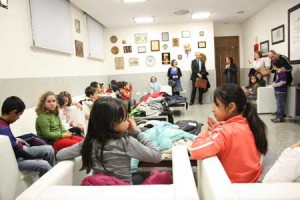
Waiting at the school reception I hear English voices. They want to know what they should bring to school for their three-year-old daughter and they’re trying to explain how difficult it is for their nine year old to complete four pages of Spanish homework when she doesn’t speak Spanish. It’s a bewildering experience for parents and children alike and there is so much room for misunderstanding. In this case the school administrator, who speaks English, is sympathetic, listens patiently and is very helpful. But that isn’t always the case. It occurs to me how useful it would be just to have some basic introductory information for parents of English pupils just to help them get started. Not … [Read more...] about Kitting the kids out for school in Spain
Starting children in Spanish schools: the big decisions
I had thought it strange that his nursery contained very few older children - in fact Joseph looked to be almost the eldest. Now I understood why. Although it seemed to be only five minutes since he was born, he could officially be starting his school career in September at only three years old. But was he and was I ready? Parenting involves a constant round of decision-making, sometimes with a minimum of information. Choosing schools and, in this case, when to start, is perhaps one of the biggest. I knew that his nursery would not interest him for very much longer. He's a lively boy who is not at his best when he's bored (as our neighbours will vouch for) and he needs the stimulus and … [Read more...] about Starting children in Spanish schools: the big decisions
Expat kids in Spanish schools: The best days of their lives?

'The education of foreign students in the province of Alicante,' a report by the University of Alicante for Asti-Alicante, an educational charity, is an extensive piece of research that paints to a very sorry picture of the experiences of some British students in Spanish state schools. The report found that British students often segregate themselves, become involved in gangs and refuse to subscribe to the Spanish system. Eventually they drop out, choosing absenteeism as an option in their later secondary years. The problems, the researchers noted, were most acute in schools with high proportions of English students with disruptive behaviour causing significant difficulties for themselves … [Read more...] about Expat kids in Spanish schools: The best days of their lives?